
Defiant, Redhills Durham
Tales of resilience and rebuilding in the former coalfield

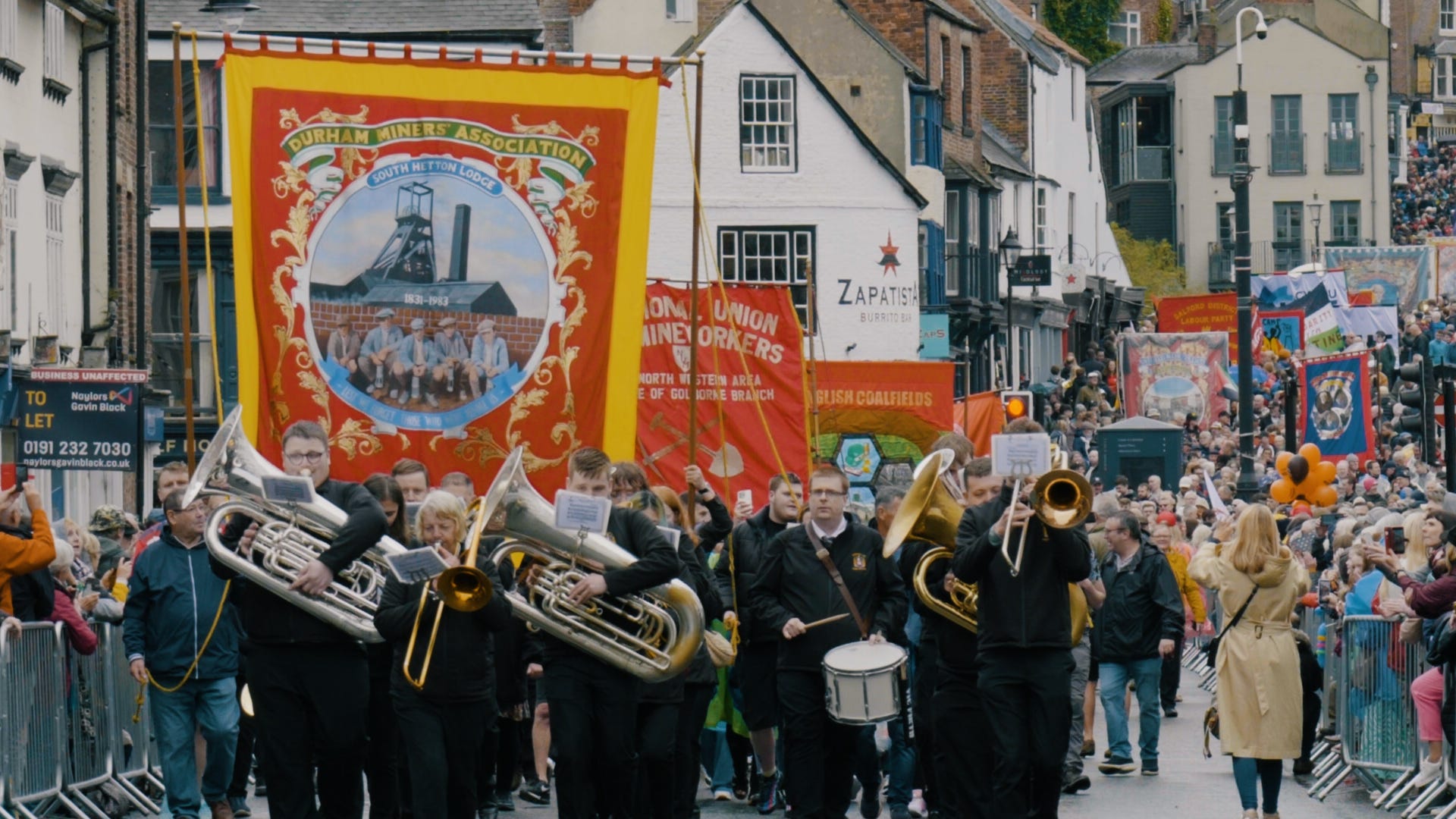
It’s time to listen. Not to ‘give voices’ but to pay attention to the ones people already have.
The anniversary of the Miners’ Strike has been and gone, with all the associated commemoration and chatter – some more useful than others.
But the mining communities themselves are still there, and their story is no less urgent today.
Defiant: County Durham, the Miners’ Strike and its Legacy premieres on Sunday at Redhills Durham, the impressively refurbished miners’ hall and the second cathedral of its hometown. It was directed by Marie Gardiner and Mark Thorburn of Lonely Tower Film & Media, who told Talking Northeast about the new film.
“It’s not just looking back at what happened 40 years ago, it’s the lasting effects of that now,” said Marie. “The lack of opportunity in certain areas, the dis-investment in certain areas, people still feel that. But they also still feel really strongly connected to their mining heritage. They want to have pride in the place that they live, in the work that they’ve done.”
Defiant grew from Hollowed Ground: the People of the Durham Coalfield, which came out in 2023 and drew on interviews throughout the region’s mining communities.
But, with the 40th anniversary of the strike bringing impressive work on the national story, there was room for more from Durham.
“We felt that nobody was telling the story of our area, of our friends and neighbours,” said Mark. “We never intended a sequel to Hollowed Ground, but this sort of is.”
‘That legacy can look negative, but it really isn’t’
Although the film is rooted in the 1984/85 strike, it is less history lesson, more assessment of a legacy.
And that story – one of resilience and, yes, defiance – continues in the former coalfield.
“All that legacy can look negative,” said Mark. “But it really isn’t. There are still determined people who are committed to building something new, to creating something, whatever the lack of resources.
“Despite a lack of external funding, despite deliberate neglect, people are still able to achieve things.”
Examples of those achievements include Horden’s Ensemble ’84, a fledgling theatre company for East Durham that has rapidly evolved to produce high-quality performances of Brecht and Shakespeare, as well as telling the village’s story in its own voice.
‘When good work comes out of places, that’s the antidote’
If it sounds improbable, that’s the impact of territorial stigma – from historic decisions to deprive communities of funding to contemporary ‘poverty porn’ Vloggers seeking clicks among boarded-up windows. It’s an issue that underpins some of Marie’s ongoing PhD research.
“Places get a bad reputation – often undeserved – and people talk about the negative aspects,” she said. “That gets reproduced and it becomes what the place is known for.
“Where you have groups doing good work that comes out of places, that’s the antidote. It’s people saying ‘the place we like isn’t perfect but also there is a lot of good coming out of it, a lot positive stuff coming out of it.’
“It’s really important that it happens, because then people can feel pride of place. They want to stay, to improve their areas, to fight for them. We need that more than ever at the minute.”
‘People are still fighting for their communities’
Looking forward also helps to combat weaponised nostalgia, another overly-familiar contemporary social media trope.
“A degree of nostalgia is healthy,” said Marie. “People’s memories always change, all of us, regardless of what we’re doing. When we think back, it’s never 100% what it actually was.
“People can romanticise things – and particularly dangerous jobs like mining – but it’s important that they talk about their stories in ways that are important to them, in ways that make them feel pride, that they’ve been listened to.
“If part of that is to slightly romanticise, to add in a little bit of nostalgia, I think that’s OK while you’re also getting the facts of it across.”
But?
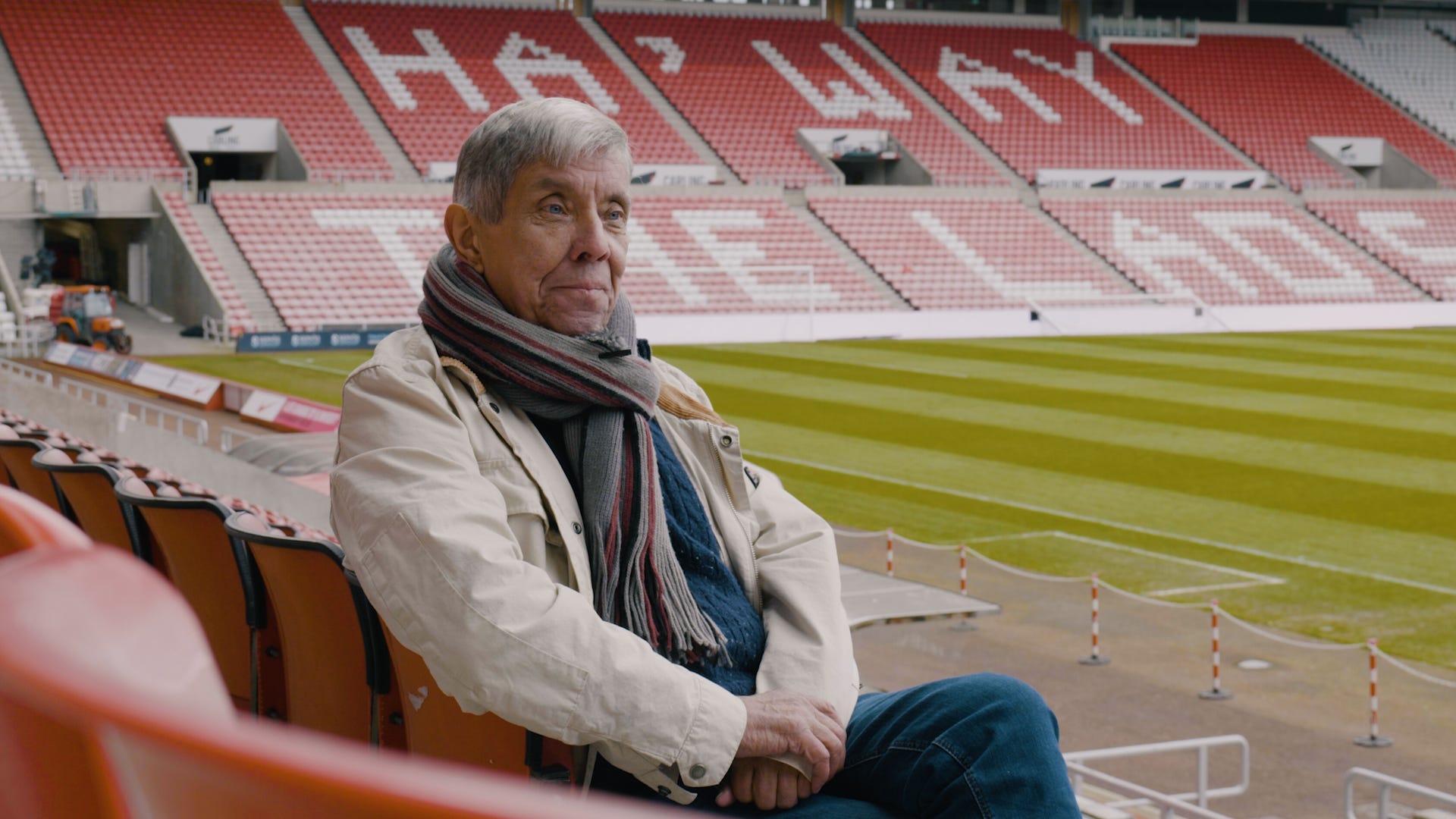
Mark cites Alan Mardghum of the Durham Miners’ Association insisting on the need for mining communities to tell their own story. “The phrase he used was ‘warts and all’,” Mark said.
“A lot of people glamorise the strike and talk about the heroes of the strike. And Alan acknowledges that he considers everybody who stood on a picket line with him to be a hero.
“But you need to know the stuff they got wrong, the stuff that didn’t go the way it should have done. You need to tell the whole story. We, hopefully, try and add a voice to the other voices that are trying to do that.
“The overall message is that people are fighting for their communities. The industry would have evolved anyway. But we’re fighting for our communities and that’s still happening. Those communities still need to be fought for.
“That’s the legacy.”
Defiant: County Durham, The Miners’ Strike and its Legacy premieres at Redhills Durham on Sunday, July 5. The screening starts at 6pm, and the evening also includes a Q&A. Tickets £5-15.