
Keep the music alive
The battle for grassroots venues - and why they matter!


It doesn’t make for good reading. 2023 saw a record number of grassroots music venues – 125 in total – close their doors. For the most part, it happened quietly. The headlines focussed on the stadium tours, artists in the Taylor Swift / Oasis bracket.
Yet it is exactly those grassroots venues that underpin the entire musical ecosystem. That’s not to downplay the value of hearing Springsteen at the Stadium of Light or Sam Fender at St. James’ Park. But we need to protect the equally valuable attractions of micro-venues like The Holy GrAle in Durham or Play Brew in Middlesbrough, to name just a couple of places where I’ve enjoyed gigs this year.
For performers, grassroots venues are a vital part of the learning curve. Singer-songwriter Jodie Nicholson, who is about to go on a UK tour in November, regards them as fundamental to her career.
“Seeing artists and bands perform in grassroots venues ultimately inspired me to start songwriting as a teen,” Jodie said. “It continually inspires and informs my aspirations as an artist now in many different ways: from seeing how an artist interacts with a crowd, how the setlist is curated dynamically, to stage lighting, how to translate the recorded versions of songs live, transitions between songs and even what to wear on stage.
“Creating and releasing music is a very circular process and grassroots venues are the vessel that enables artists to share their music in real-time as a unique experience.”
One way fans can keep this unique experience alive is by booking in advance. Early bookings can be the difference between a show going ahead or not, with a whole range of hidden expenses covered by cash raised from advance sales. “With costs being so high right now, advance ticket sales are more crucial than ever in making sure shows go ahead,” Jodie said. “Without this, it’s difficult for our scenes, venues and artists to continue to thrive.
“If you’re considering going to a show, no matter the size, please try to buy tickets in advance.”
‘If advanced bookings are down, it’s scary because that’s your income’
Labyrinthine Oceans are a hotly-tipped Tyneside dream-rock band with a strong shoegaze vibe to their sound. I first saw them at Stockton’s NE Volume, an intimate, no-frills space that provides a platform for emerging bands – something that lead singer Julia O’Neill greatly values.
“Grassroots venues are hugely important,” she said “This is where you get the trendsetters for upcoming music coming out to support people and where you can see scenes forming.
“They also just feel more special than big venues sometimes if the vibe is right!”
It’s an exciting time for the band. They’re playing a first European gig in Belgium on Oct. 26 before returning home with a show at Newcastle’s legendary Cluny on Nov. 1. However, without the kind of hype that blows up around high-profile arena tours, booking gigs can be a risk.
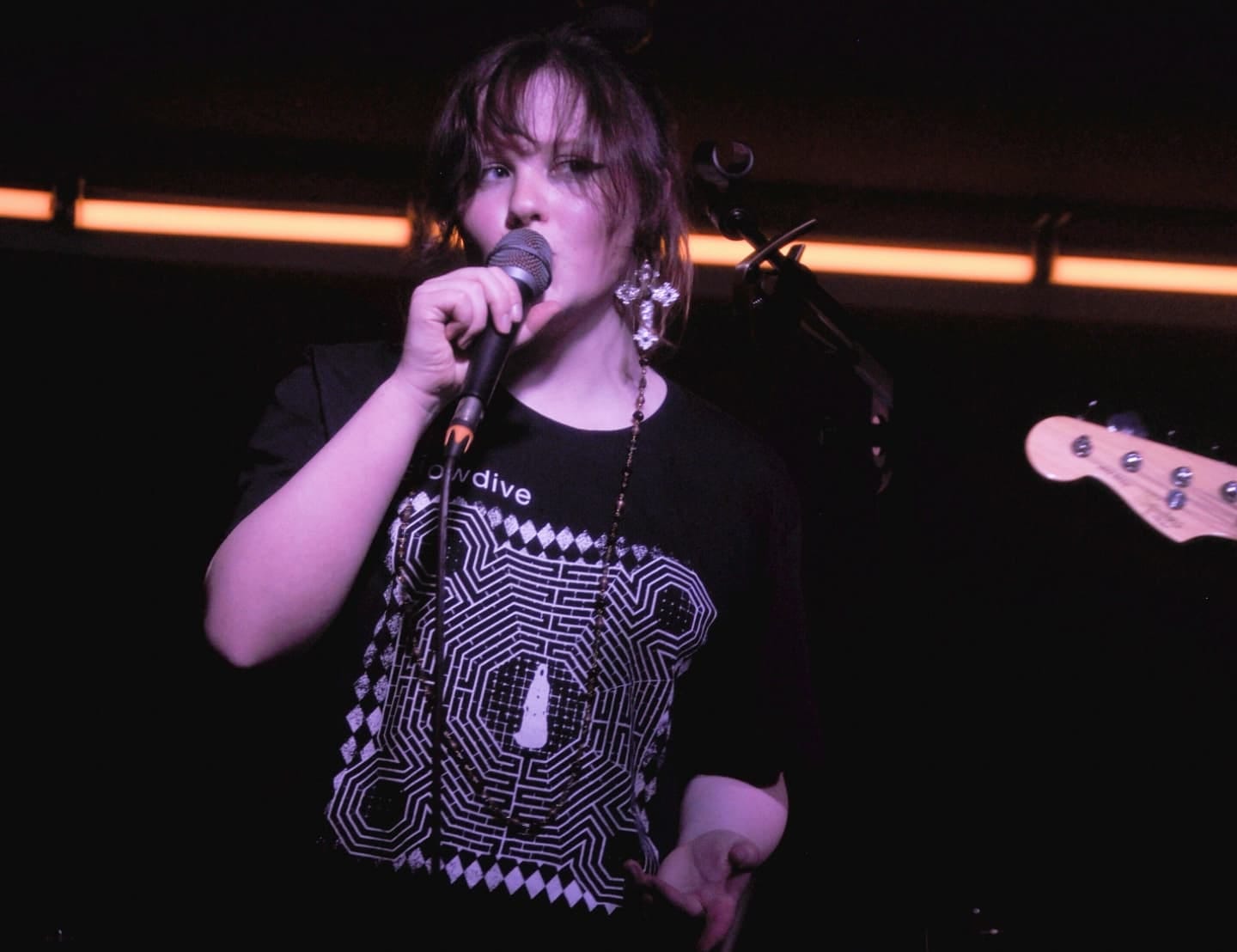
“I don't think some audiences see music as something that affects people's livelihoods at a grassroots level,” Julia said. “When you’re independent, if advance bookings are majorly down it’s extremely scary because that's your income.”
That’s why advance sales are crucial. “It’s just not worth the risk if a show is costing you £300 in fees for the room and techs but you've only sold £50 worth of tickets a few days before the show,” Julia added. “Even if you expect a good doors turnout it’s still a risk as you have to pay the other bands and also cover personal expenses like travel.”
‘We’re having to batten down the hatches’
It’s not much easier for the venues themselves, as Paul Burns, CEO of Tees Music Alliance, points out. The on-going cost-of-living crisis makes this, in his view, “the worst time in living memory” after 30 years of putting on gigs in and around Stockton and managing the Georgian Theatre venue.
“Covid was tough, we got through it but people still weren’t confident about coming out to gigs,” he said. “Crowd numbers were lower, people got out of the habit or found other things to do. Then, just at that was turning a corner, the cost of living crisis hit – and because we didn’t have somebody speaking from Downing Street every night, that feels like a silent crisis.”
Even if the immediate turmoil sparked by the Truss / Kwarteng budget has calmed, costs remain high. “Once prices go up, they don’t tend to come back down,” Paul added. “Things like heat, light, stocking the bar – those costs are much higher. Artists’ costs are up, insurance costs are up, security on the door, everything has gone up, as have wages.
“Plus, gigs are a luxury item. It’s among the first things that people stop spending on. Or they book in advance, when they have money, but by the time the gig comes around they might be looking at shoes for the kids, tyres for the car, that kind of thing. Suddenly you have the tickets but feel you can’t afford the costs of making a night of it – food, drink, maybe a taxi. For venues, that means people don’t turn up and don’t spend money at the bar, which is where we make our money. The ticket money goes to the performers.”
Although the picture is bleak, Paul remains hopeful. “Venues and organisations like ourselves are just having to batten down the hatches,” he admitted. “But I think there’s a belief that things are going to get better, even if it’s not going to be overnight.”
‘We’re in a good place but it needs to be nurtured’
Part of a long-term improvement might be found in The Music Venues Trust’s manifesto. Published earlier this year, it has several ideas about how to support grassroots live music. One proposal – implemented by Coldplay on their upcoming tour – is to put a levy on tickets for arena and stadium gigs and plough that money back into venues like NE Volume, The Cluny or Tees Music Alliance’s Georgian Theatre. In Coldplay’s case, 10% of tour profits will go to support the Music Venues Trust.
Meanwhile, Julia at Labyrinthine Oceans suggests the scene could benefit from shaking some of its cliquey image. “We should be trying to encourage more people to come into small gig spaces,” she said. “I know a lot of people are very anxious to go into a place that ‘isn’t their crowd’. It’s especially tough to persuade someone to come on their own, or if they don’t know what to expect from the venue or the music.
“Making smaller gigs more accessible to new audiences who have maybe only been to arenas and stadiums would be a really great thing to do.”
And while the music scene changes and evolves, there is still optimism. Graham Grundy, whose Down By The River non-profit agency promotes original live music across the region, remains upbeat.
“When I look at what’s happening in the northeast, as consumers of live music we are spoiled for choice. I could be out every night seeing interesting stuff.”
That choice brings its own challenges: promoters need to juggle affordable ticket prices and decent pay for artists while keeping their programmes interesting. And competition is not just from other gigs and venues, but the wider entertainment offer – in home as well as out – and a rising cost of living.
As a result, the nature of venues is changing. Graham regularly puts on gigs at Claypath Deli, a cosy, student-friendly café reckoned to do the best sourdough in Durham. “Live music is part of their business but not essential to its day-to-day survival,” he said. “The café and bakery are the main things.
“The venues I work with all diversify their offering and this would seem to be the way forward. Perhaps the days of a stand-alone venue are coming to an end, but I truly believe grassroots music is in a good place, but it does need to be nurtured. All I can say is Keep Music Live.”